PET Recycling Loop

RECYCLING SUCCESS

Plastic offers clear benefits as a lightweight and hygienic material in food production. Our success: Since June 2021, the bottle body of all PET bottles for Lidl and Kaufland in Germany—excluding the cap and label—has been made from 100% rPET. This is how we ensure we are fit for the future.

WHY PET FOR BEVERAGE PACKAGING?

According to a life cycle assessment by the ifeu Institute, our PET bottle is one of the most eco-friendly options among those evaluated across the studied impact categories. We were able to achieve this significant step forward in PET recycling through substantial investments in the recycling cycle, solutions developed in-house in some cases, and expertise built up over many years.

In 2025, our PET recycling system for single-use PET bottles subject to a deposit saved approximately 67,000 metric tons of virgin plastic and reduced CO₂ emissions by more than 110,000 metric tons through the use of rPET. Naturally, these achievements do not mark the end of our commitment—we continuously work to optimize our PET bottles.
Recycling

OPTIMIZED BOTTLE WEIGHT

We constantly challenge the status quo. 25 grams in fiscal year 2025: That’s the average weight of the bottle body for a 1.5-liter Saskia Still bottle. This makes it significantly lighter than a comparable reusable glass bottle. The lower weight helps reduce emissions, for example, during transport. The ifeu Institute has confirmed this positive effect on the global warming potential (GWP) of our system.

Recycling

RECYCLING IS THE FUTURE

We consistently use recycled materials to keep them in the recycling loop. As a result, since 2021, all single-use PET bottles for the Lidl and Kaufland private labels manufactured by Schwarz Produktion companies in Germany have been made from 100 percent recycled material (excluding caps and labels).

With our recyclable bottle, we have established an efficient recycling system in Germany that enables us to offer consumers an affordable, eco-friendly alternative.

A SECOND LIFE FOR PET BOTTLES

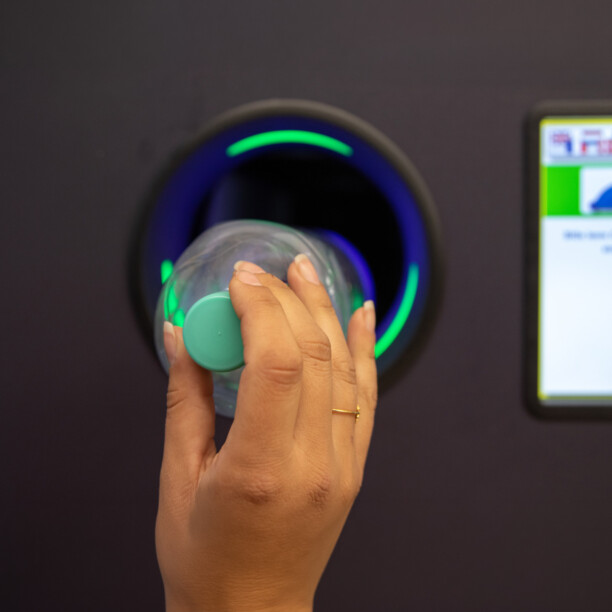
What exactly happens when a PET bottle disappears into the reverse vending machine? For most people, the journey ends with a soft “click” and a deposit receipt in hand. But for the bottle, that’s the starting point of a new journey. Instead of ending up as trash, it becomes a valuable raw material for the next generation. In our PET recycling cycle, we turn “old” into “new” again.
Transport PET-Flaschen
PET Recycling Loop

PET BOTTLE RETURN

The closed-loop material cycle begins at the reverse vending machine in the store. There, all returned bottles are pre-sorted by color, compacted, and then transported to the central warehouse.

PET Recycling Loop

AT THE CENTRAL WAREHOUSE

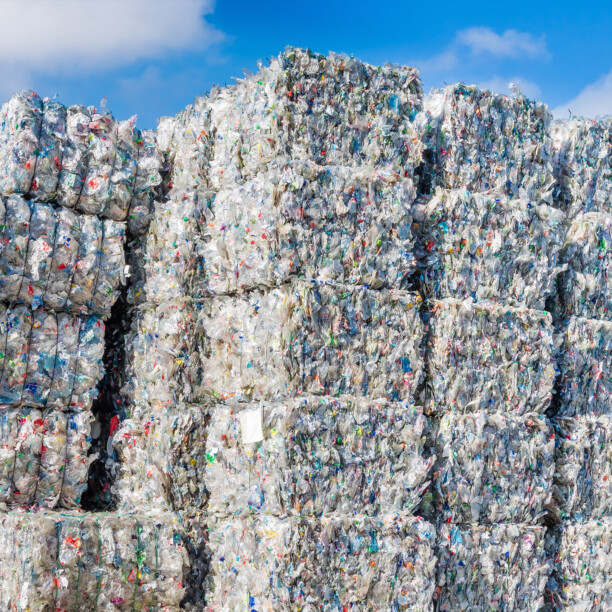
At the central warehouse, the PET bottles are compressed into bales. This allows them to be transported to the MEG Neuensalz or MEG Übach-Palenberg recycling plants in a space-saving manner. To put this in perspective: the volume that would otherwise require 26 trucks to transport as 0.7-liter glass bottles fits onto a single truck—around 400,000 bottles, compressed into bales. This reduces the number of transport journeys compared to moving uncompacted bottles.

PET Recycling Loop

PROCESSING AT THE RECYCLING PLANT

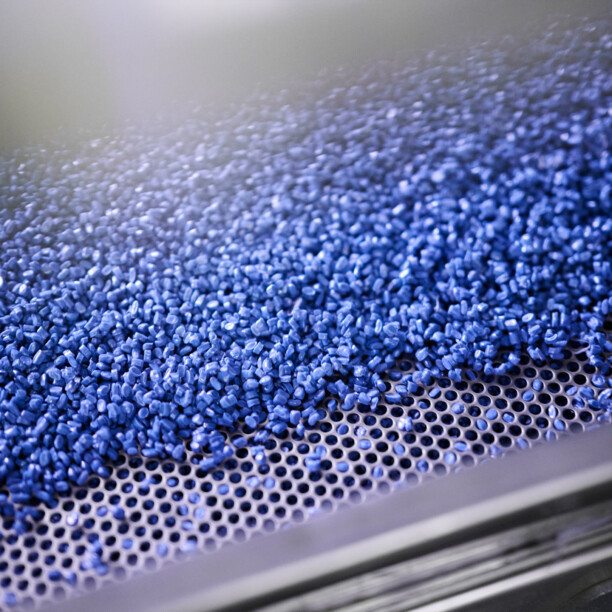
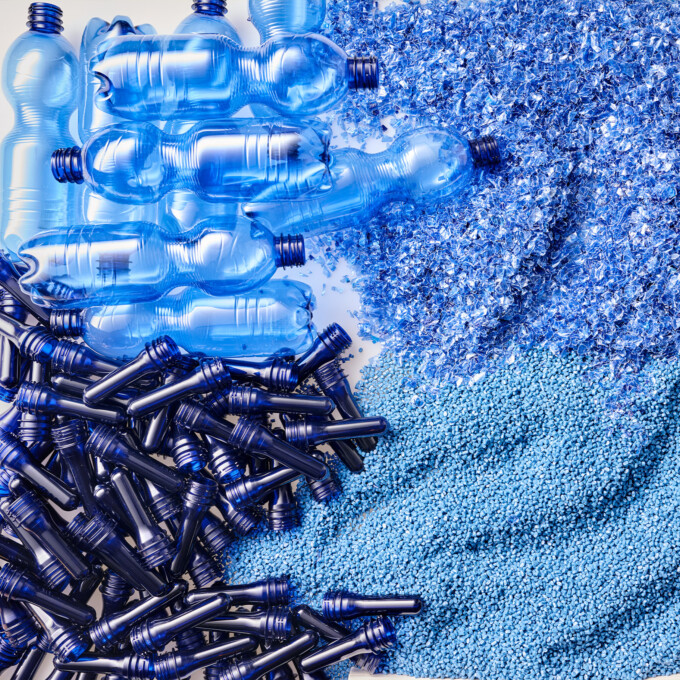
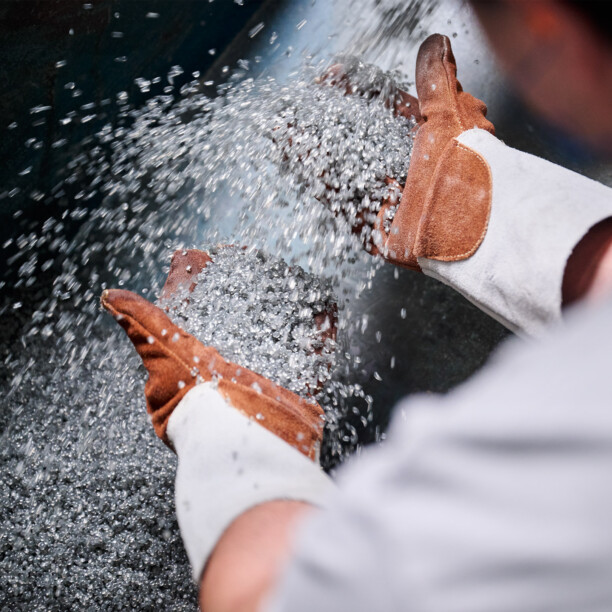
At the recycling plant, the bottles are stripped of old labels and caps and sorted once again. Next, they are ground into flakes, thoroughly washed, and processed into food-grade PET regranulate under strict quality standards. This serves as the raw material for new PET bottles.

PET Recycling Loop

PROCESSING PLASTICS INTO PREFORMS

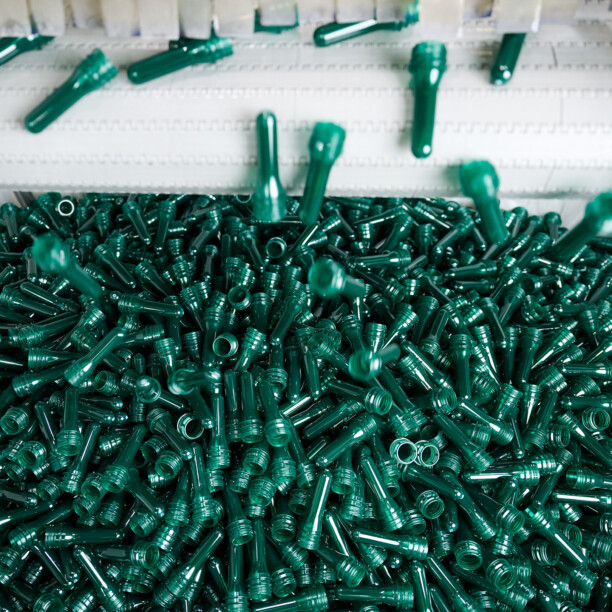
At the MEG Roßbach and MEG Übach-Palenberg plastics plants, we use PET regranulate to manufacture preforms for new bottles. Following production, these are delivered to MEG’s beverage plants in Germany.

PET Recycling Loop

BOTTLING PROCESS

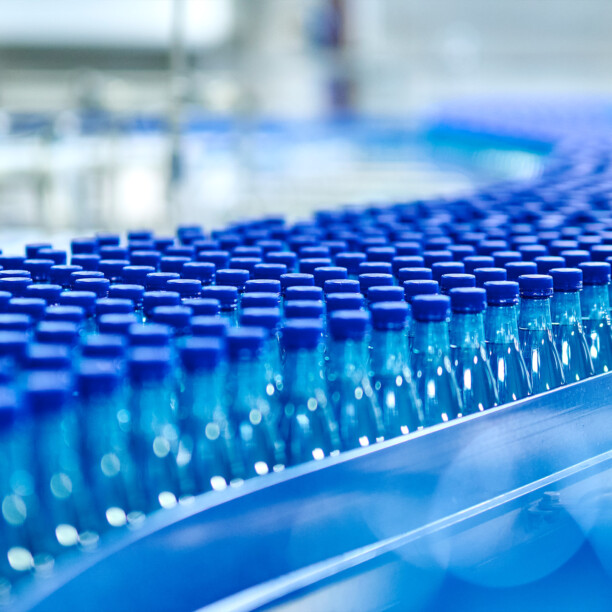
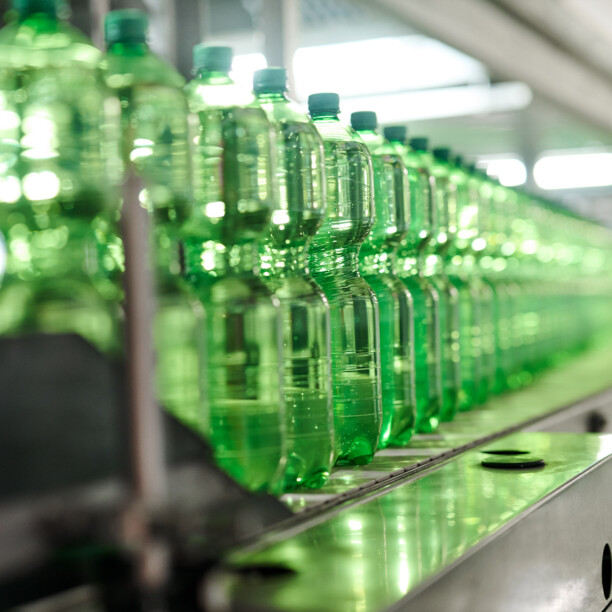
At the beverage plant, the preforms are heated, blown into new bottles, and filled with mineral water or soft drinks for our retail partners’.

PET Recycling Loop

DISTRIBUTION

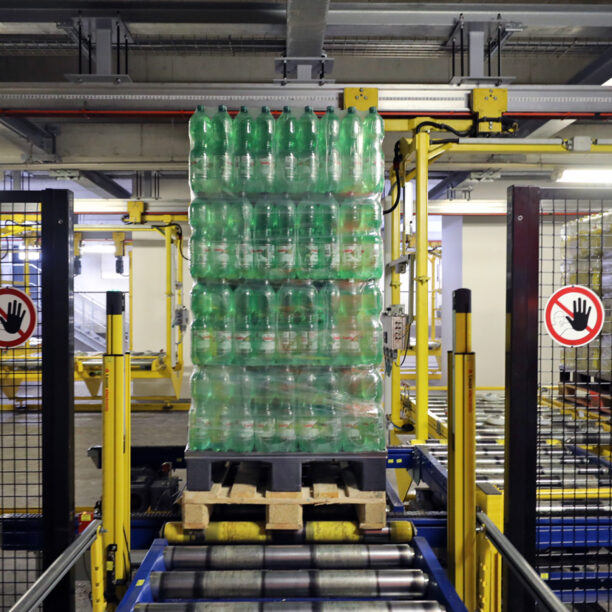
From each plant, the products are then shipped back to the retailers’ central warehouses and subsequently to the stores. Once they return to the shelves and the next deposit is collected, the cycle begins anew.